Setting up a new chemical or biological laboratory is a high-stakes endeavor where every detail, right down to the compliance of your lab furniture, matters. One failed ISO or OSHA audit can derail months of research, incur massive fines, and halt operations indefinitely.
The culprit behind these failures isn’t always poor safety protocols; it is frequently the physical infrastructure itself. Standard tables and generic casework might look pristine on day one, but under the stress of daily use, they quickly become breeding grounds for cross-contamination, chemical burns, and structural degradation. When a compromised work surface voids your facility’s compliance, the operational fallout is immediate.
You need specialized infrastructure engineered specifically for rigorous safety standards. Architecting a compliant lab requires meticulous attention to material science, spatial layout, and ergonomic design. From preventing biological cross-contamination to securing reliable lab furniture supply chains, here is exactly how to design a facility that passes every safety audit without breaking a sweat.
The Anatomy of a Compliant Setup: Material Science First
Auditors zero in on work surfaces immediately. OSHA standards (specifically 29 CFR 1910.1450 regarding occupational exposure to hazardous chemicals) and ISO 17025 mandates dictate that lab environments must actively mitigate risks.
You cannot achieve this with standard commercial casework. Chemical spills, aggressive cleaning agents, and constant heat exposure will instantly degrade melamine or standard laminates. When the surface layer breaches, the porous core absorbs pathogens and chemicals, making sterilization impossible.
Eradicating Cross-Contamination Risk
For biological setups, micro-intent matters. Your primary goal is preventing cross-contamination.
- Non-Porous Mandates: Surfaces must be completely non-porous. A single micro-fissure can harbor bacterial growth.
- Chemical Resistance: Work surfaces must withstand aggressive disinfectants (like concentrated bleach or quaternary ammonium compounds) without pitting or clouding.
- Seamless Integration: Joints and seams are liability zones. Sinks and backsplashes should ideally be monolithic or thermo-fused to prevent liquid ingress.
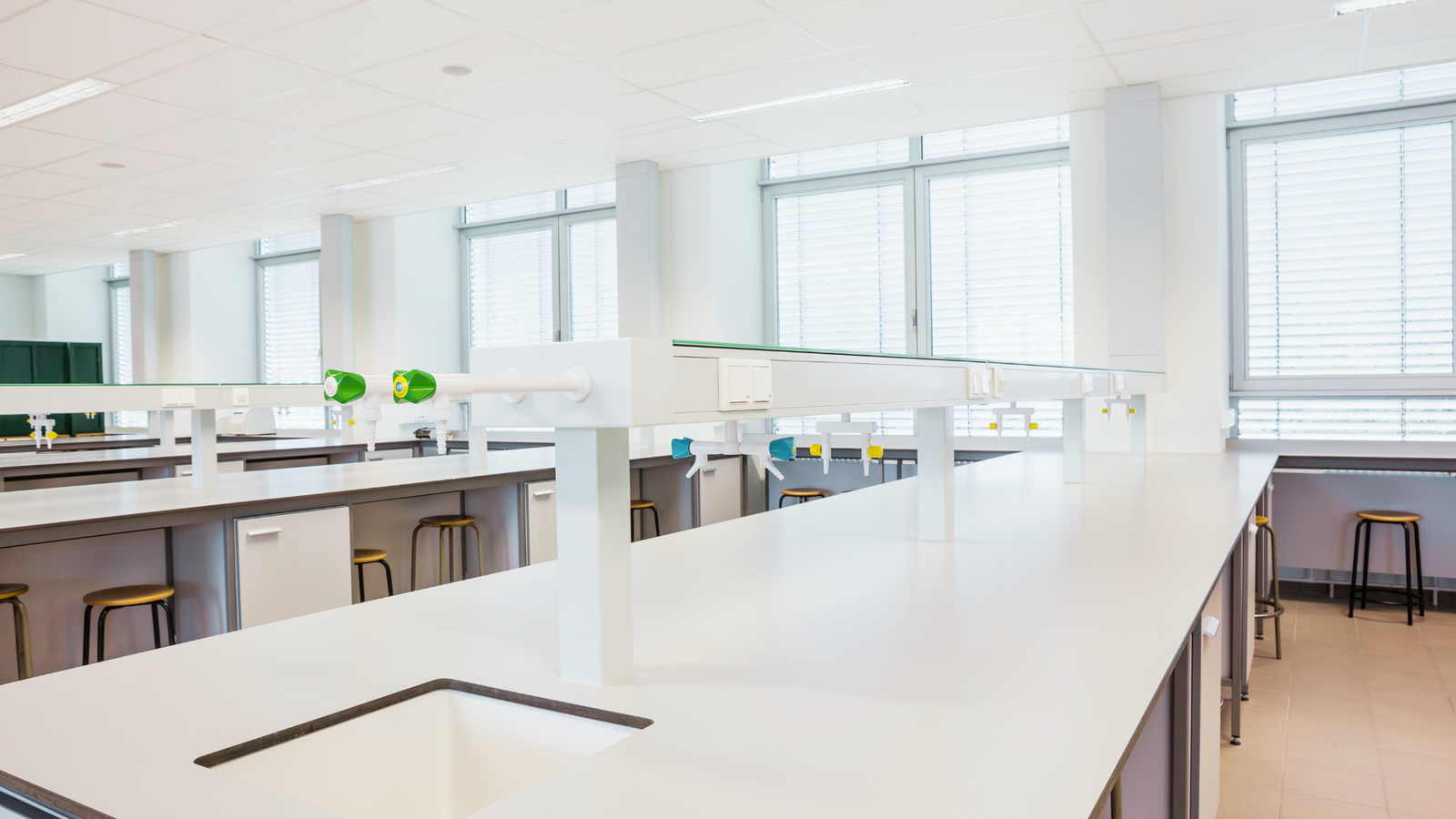
This is why choosing the right lab tables is a structural necessity, not an aesthetic choice.
Compliance Gap-Analysis: Standard vs. Specialized Surfaces
To truly understand the operational risk, we must compare standard commercial furniture against specialized, laboratory-grade epoxy resin. This matrix highlights common compliance failures we consistently identify during facility fit-outs.
Architecting the Layout: Spatial Dynamics and Flow
Purchasing the right materials is only half the battle. How you configure those lab furnitures dictates your daily operational safety and audit success.
Modular Office and Lab Integration
Modern labs are not just test tubes and fume hoods. They require integrated write-up spaces, administrative zones, and secure storage. Utilizing modular office furniture that blends seamlessly with heavy-duty lab setups allows for clear delineation between “clean” zones and “active” testing zones.
- Aisle Clearances: OSHA requires clear egress routes. Never compromise aisle width for extra bench space. Maintain a minimum of 36 to 48 inches of clearance between benches.
- Fume Hood Placement: Position heavy-duty lab tables and fume hoods away from high-traffic walkways and doors to prevent disruptive air currents that compromise the hood’s containment capabilities.
- Ergonomic Workstations: Musculoskeletal disorders are a flagged metric in comprehensive safety audits. Adjustable-height benches ensure technicians can operate microscopes and pipettes without strain.
Partnering with Expert Manufacturers
Relying on fragmented vendors for your lab fit-out introduces massive QA inconsistencies. You need a centralized, expert partner capable of delivering everything from raw material processing to final installation.
At Sri Furniture, our expertise spans across specialized commercial units, educational facilities, and rigorous research laboratories. We understand that custom design and tailor-made layouts are non-negotiable for compliance.
- Manufacturing & Supply: We maintain strict quality control over our materials, ensuring every bench and cabinet meets international safety standards.
- Global & Express Delivery: Whether you are building a new facility in Bengaluru or outfitting a commercial space globally, our supply chain ensures your project stays on schedule.
- Comprehensive Solutions: Beyond the lab, we architect the entire ecosystem—from cafeteria furniture for safe break areas to specialized institutional furniture for attached academic wings.
Do not leave your next audit to chance. Invest in the infrastructure that protects your people and your research.
Frequently Asked Questions (FAQ)
What are the primary OSHA requirements for lab tables? OSHA requires that lab tables are sturdy, appropriately sized for the task, and made of materials resistant to the specific chemicals and hazards present in that specific lab environment. They must not present a fire hazard or easily degrade, creating unsafe working conditions.
How do I prevent cross-contamination on work surfaces? Utilize non-porous, monolithic surface materials like Epoxy Resin or solid Phenolic Resin. Implement strict zoning (clean vs. dirty areas), ensure seamless joints around sinks, and use materials that can withstand rigorous, repeated chemical sterilization without pitting.
Can I use standard modular office furniture in a laboratory? Standard modular furniture should only be used in designated “clean” write-up or administrative areas separated from active testing zones. For any area handling biological agents or chemicals, specialized, chemical-resistant casework is mandatory for compliance.