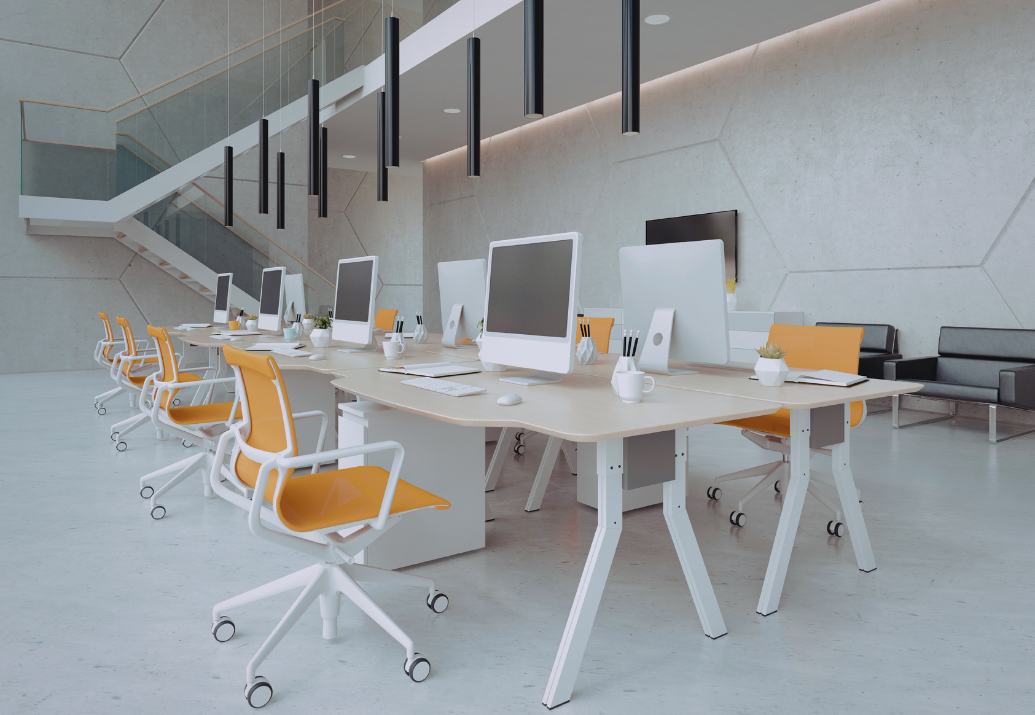
The traditional office layout—rows of heavy, immovable wooden desks and rigid partitions—is rapidly becoming a thing of the past. As businesses pivot toward hybrid work models and collaborative team structures, the physical workspace must keep pace. Enter the modular workstation: a solution that is as much about psychology and agility as it is about furniture.
If you are rethinking your office layout, you aren’t just buying desks; you are designing an ecosystem. After 15 years in the commercial interiors space, I’ve seen how the right configuration can shift a company’s culture from siloed and stagnant to dynamic and high-energy.
What Exactly Makes a Workstation "Modular"?
At its core, modularity refers to a system of independent units that can be combined, rearranged, or expanded. Unlike bespoke built-in furniture, a modular workstation is designed for change.
Imagine your team grows by 20% in six months. With traditional furniture, you’re looking at a major renovation. With a modular system, you simply add new segments to the existing “spine.” These systems typically include:
- Interchangeable Privacy Screens: From glass toppers for light to acoustic fabric for focus.
- Integrated Power Management: Hidden “raceways” that keep cables off the floor.
- Mobile Pedestals: Storage units on wheels that can double as guest seating.
The Ergonomic Advantage: More Than Just Comfort
The biggest mistake businesses make is prioritizing aesthetics over ergonomics. A modular workstation allows for personalized comfort in a way that “one-size-fits-all” desks cannot.
In 2026, the gold standard is the height-adjustable modular desk. Allowing employees to switch between sitting and standing throughout the day isn’t just a perk; it’s a health necessity that reduces fatigue and long-term musculoskeletal issues. When people feel better physically, their output remains consistent throughout the afternoon slump.
Optimizing Your Floor Plan: Popular Configurations
Depending on your team’s workflow, the way you “cluster” your modular units will dictate the office vibe:
- The Honeycomb (Hexagonal) Layout: Best for creative teams. It provides a sense of privacy while keeping everyone within a swivel’s turn of their neighbor for quick brainstorming.
- The Back-to-Back Linear Cluster: Ideal for high-density tech teams. This layout maximizes floor space while using a central “cable spine” to manage heavy IT requirements.
- The L-Shaped Executive Modular: Provides a deep primary work surface and a secondary return for meetings or secondary monitors, perfect for managers who need to multitask.
Sustainability and the "Long Game"
From a business investment perspective, modular furniture is the most sustainable choice—both for the environment and your balance sheet. Because parts are replaceable, you don’t need to scrap an entire desk if a single panel is damaged. Furthermore, as office trends change, you can “reskin” your modular frames with new colors or materials without buying entirely new skeletons.
Creating a "Quiet Zone" in an Open Office
One of the loudest complaints about modern offices is the noise. Modern modular workstations solve this through acoustic zoning. High-density felt partitions can be snapped onto the workstation frames to absorb ambient chatter, creating a “library-quiet” environment even in the middle of a busy sales floor.
Frequently Asked Questions (FAQ)
1. How long does it typically take to install a modular workstation system?
2. Are modular workstations more expensive than traditional office desks?
3. Can I integrate my existing technology into these workstations?
4. What is the best material for durability in a high-traffic office?
5. How do I decide between "Open Plan" and "Private" modular setups?
Our Editorial & Research Policy
At Sri Furnitures, we believe that a workspace is a tool for success. Our content is developed through rigorous market research and interviews with interior designers and workplace ergonomists. We prioritize functional durability and human-centric design over fleeting decor trends. Every recommendation we make is vetted for structural integrity and compliance with international office safety standards. We are committed to providing transparent, expert-led advice to help Indian businesses grow through better design.
Contact Details :
Contact: +91 99002 41276
Email: salessln2006@gmail.com
Address: Shed No. G-A 1/7 Shree Lakshmi Venkateshwara Indl. Estate Sunkadakatte Village Vishwaneedam Post Bangalore 560 091