You open your bedroom door, only to have it bang against an oversized, clunky almirah. When you actually try to open the almirah doors, you have to step backward onto your bed just to see what’s inside. If you are living in a compact home or apartment near Sunkadakatte Village, you know exactly how frustrating this struggle can be.
You are bleeding floor space. Every square foot dedicated to the swing-radius of traditional doors is space you cannot use for walking, a side table, or a cozy rug.
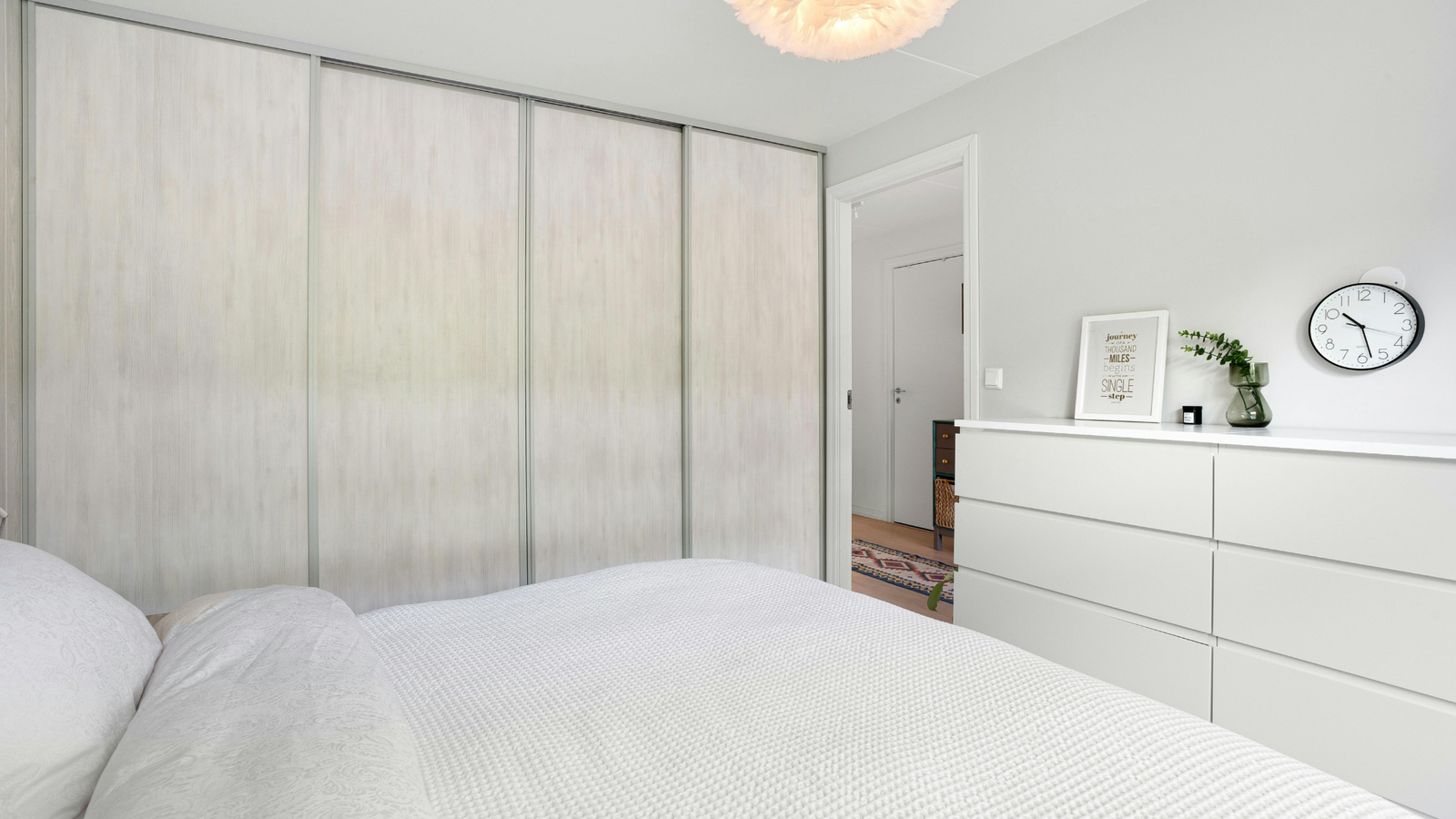
Enter sliding wardrobe designs. By eliminating the outward door swing entirely, you reclaim vital inches in a cramped room. More than just a sleek facade, these units are engineered powerhouses for organization. Let’s break down exactly how you can use tailored bedroom cupboard ideas to build the ultimate small room storage solutions right here in your neighborhood.
Why Traditional Cupboards Fail in Small Bedrooms
Standard hinged wardrobes are space hogs. A typical door needs at least 24 inches of clearance just to swing open. If your bed is positioned too closely, you are trapped in a daily logistical nightmare.
- Dead Zones: The space immediately in front of a hinged wardrobe becomes an unusable “dead zone.”
- Poor Vertical Optimization: Freestanding units rarely reach the ceiling, leaving a dusty, wasted gap at the top.
- Rigid Internals: Traditional almirahs usually offer a fixed hanging rod and two deep shelves. This forces you to stack clothes into precarious towers that inevitably collapse.
Top Sliding Wardrobe Designs for Tight Spaces
Customization is the heartbeat of a functional bedroom. Here are the leading configurations we deploy to maximize utility without sacrificing aesthetics in local Sunkadakatte Village homes.
Mirrored Sliding Doors
When you lack square footage, you must trick the eye. Mirrored doors reflect natural light from your windows, instantly doubling the visual depth of the room. You also eliminate the need for a standalone dressing table or full-length floor mirror, saving you even more space.
Floor-to-Ceiling Modular Units
Why stop at seven feet? Taking your wardrobe straight to the ceiling capitalizes on vertical real estate. The highest compartments become dedicated zones for seasonal storage—think heavy winter quilts, suitcases, and holiday gear that you only pull down once or twice a year.
Built-in Niche Wardrobes
If your bedroom has an awkward architectural recess or a recessed wall, flush-mount a sliding wardrobe right into that cavity. By aligning the tracks flush with the existing wall, the wardrobe feels like a structural part of the architecture rather than a bulky add-on.
Decoding the Internal Configuration: A Diagram of Efficiency
A beautiful sliding door is useless if the interior remains a chaotic mess. Small bedrooms demand aggressive internal optimization. At Sri Furniture, we zone the interior based on frequency of use and ergonomics.
Here is the blueprint for a highly optimized internal configuration:
| Storage Zone | Height Placement | Ideal For | Recommended Accessory |
| Zone 1: Deep Storage | 80″ to Ceiling | Suitcases, winter bedding, bulk items | Open loft shelving with heavy-duty base panels |
| Zone 2: Easy Reach | 40″ to 80″ | Daily shirts, jackets, dresses | Dual hanging rods (upper for shirts, lower for pants) |
| Zone 3: Visual Field | 30″ to 40″ | Folded t-shirts, sweaters, denim | Pull-out wire baskets or glass-front drawers |
| Zone 4: Accessories | 25″ to 30″ | Watches, ties, belts, jewelry | Shallow compartmentalized felt-lined drawers |
| Zone 5: Base Level | Floor to 25″ | Shoes, heavy boots, laundry | Angled shoe racks and pull-out laundry hampers |
Pro Tip: Incorporate a pull-down hydraulic hanging rod in the upper zones. This allows you to utilize the high space for daily clothing without keeping a step-stool in your bedroom.
Smart Bedroom Cupboard Ideas Beyond the Doors
Optimizing your sliding wardrobe designs requires smart hardware choices. The tracks are the lifeblood of the unit. Opt for heavy-duty, soft-close aluminum tracks with anti-jump mechanisms. Cheap plastic rollers will degrade, stick, and eventually jump the track within a year of daily use.
Additionally, consider integrating automatic LED strip lighting on a motion sensor inside the wardrobe. Small bedrooms often suffer from poor corner lighting. Opening your sliding doors to a well-lit interior makes finding your clothes faster and elevates the entire feel of the room.
Why Choose Sri Furniture for Custom Storage Solutions Near Sunkadakatte Village?
Mass-produced furniture rarely solves specific spatial problems. A wardrobe must adapt to your room, not the other way around.
At Sri Furniture, conveniently serving homes near Sunkadakatte Village, we specialize in Core Furniture Services and Custom Design & Tailor-Made Layouts. Whether you are outfitting a compact urban apartment or a large residential home in the area, we handle everything from the initial design blueprint to Manufacturing & Supply.
Our commitment to quality hardware, precision engineering, and Global & Express Delivery ensures your bespoke space-saving wardrobe is installed flawlessly. We don’t just build furniture; we engineer space.
Frequently Asked Questions (FAQs)
Are sliding wardrobes suitable for very narrow rooms?
Yes. Because the doors slide laterally on tracks rather than opening outward, they require zero clearance space in front of them, making them the absolute best choice for narrow rooms.
Can I convert my hinged wardrobe to a sliding one?
Usually, no. Sliding doors require specific track depths (typically around 2.5 to 3 inches of internal frame space) that standard hinged carcasses do not have. It is highly recommended to build a new unit specifically designed for sliding tracks.
How deep should a sliding wardrobe be?
The standard depth for a sliding wardrobe is 24 inches to 26 inches. You need approximately 22 inches for standard hangers to clear, plus an additional 2 to 3 inches of depth at the front to accommodate the sliding door tracks without snagging your clothes.
Do sliding door tracks require a lot of maintenance?
High-quality tracks require very little maintenance. You simply need to run a vacuum nozzle along the bottom track once a month to remove dust and hair, ensuring the rollers continue to glide smoothly.