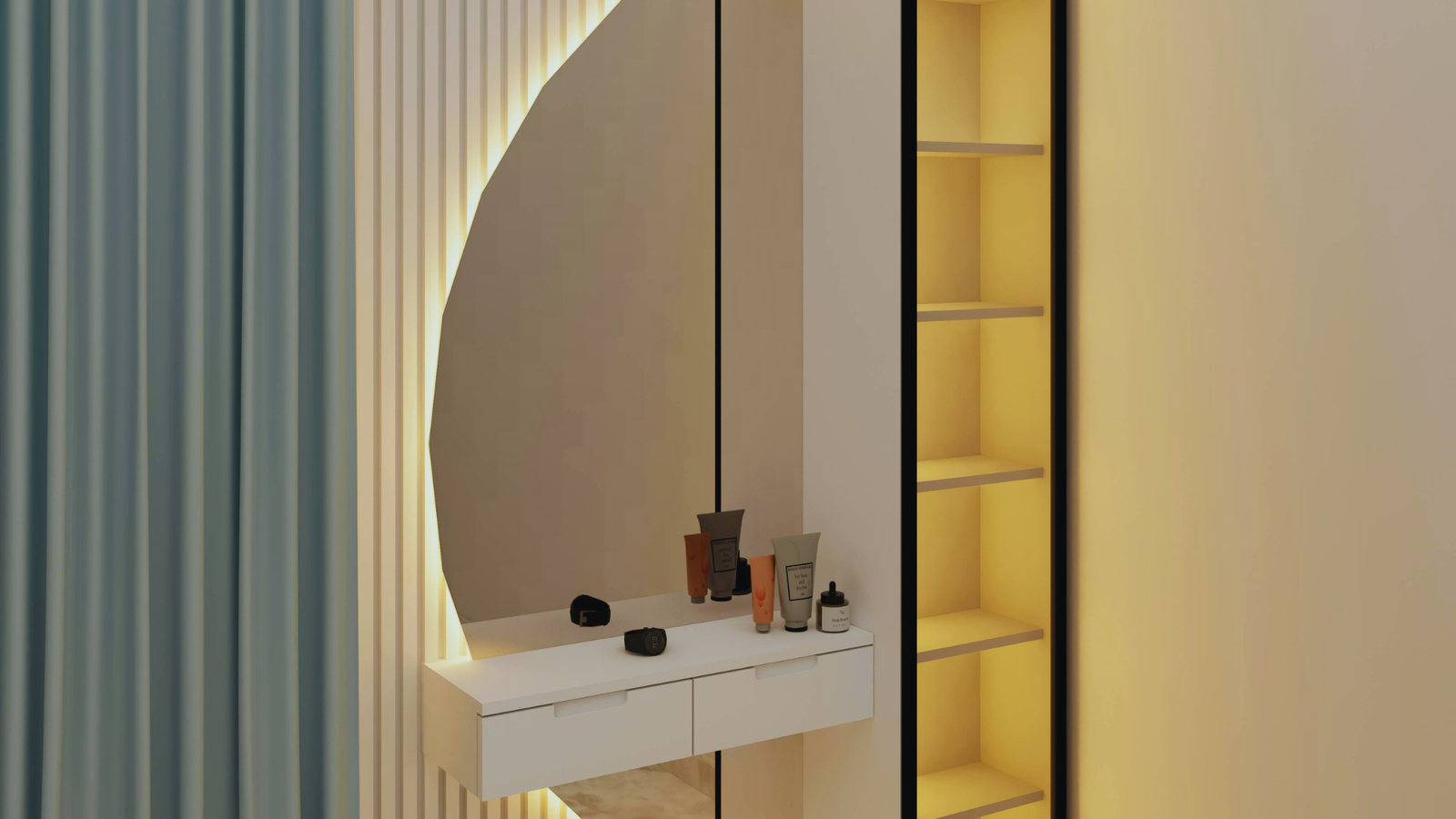
Your bedroom feels like a cave. Even at noon, you find yourself reaching for the light switch. Relying on harsh, artificial overheads during the day disrupts your circadian rhythm, while crowding the floor with floor lamps only makes a small room feel even more suffocating. You want daylight, but knocking down an exterior wall to widen a window is rarely an option.
The structural cheat code doesn’t require a sledgehammer. It requires strategic optics. By integrating a sliding mirror wardrobe, you essentially install a secondary, artificial window. When positioned correctly, expansive reflective surfaces bounce incoming daylight deep into shadowy corners, drastically altering the room’s perceived volume.
Here is the exact framework for using dual-purpose residential furniture to hack your room’s lux levels without wiring a single new fixture.
The Physics of Reflection: Light-Mapping Your Sliding Mirror Wardrobe
Placing a mirror anywhere won’t magically solve a lighting deficit. Light travels in straight lines. If you put a reflective surface in a dark corner facing a solid wall, it just reflects the dark wall.
To prove this, we conducted a standard light-mapping analysis using a baseline 12×12 foot bedroom with a single north-facing window. We measured the ambient light in lux (lumens per square meter) at the center of the room, manipulating only the placement of a full-height mirrored surface.
Wardrobe Placement vs. Lux Amplification
| Placement Relative to Window | Ambient Light (Center of Room) | Glare Factor | Spatial Perception Result |
| No Mirror (Baseline) | 150 Lux | None | Cramped, reliant on artificial task lighting. |
| Directly Opposite Window | 220 Lux | Severe | Bounces light directly back out; creates blinding morning glare. |
| Adjacent Wall (Same side) | 165 Lux | None | Fails to catch direct light rays; minimal amplification. |
| Perpendicular Wall (90°) | 310 Lux | Low | Optimal. Catches angled light and refracts it across the room’s deepest axis. |
The Perpendicular Rule: Always place your mirrored furniture on the wall adjacent (90 degrees) to your primary light source. This captures the incoming daylight and throws it laterally across the room, effectively doubling the light footprint without blinding you in bed.
Engineering the Surface: Safety and Framing
A massive sheet of glass sliding back and forth requires serious engineering. You cannot treat a floor-to-ceiling mirror the way you treat a standard wooden door.
Mandatory Safety Glazing
Never install raw, unbacked mirrors in high-traffic residential zones. A sudden impact will shatter standard glass into dangerous, jagged shards. Demand vinyl-backed safety glass. If a catastrophic impact occurs, the adhesive film holds the broken web of glass tightly together within the frame, preventing injury.
Track Mechanics and Load Bearing
Reflective surfaces are heavy. A poorly track-mounted system will warp, causing the doors to stick or jump the rails. Look for:
- Bottom-rolling mechanisms: The floor bears the weight, preventing the cabinet roof from sagging over time.
- Anti-jump rollers: Essential for keeping heavy panels locked firmly into their tracks.
- Soft-close dampers: Prevents the heavy doors from slamming into the sidewalls, which can crack the glass over repeated use.
Strategic Alternatives for Transient Spaces
Sometimes, permanent modular built-ins aren’t viable. If you are leasing an apartment or staging a temporary short-term rental, drilling massive tracks into the ceiling isn’t an option.
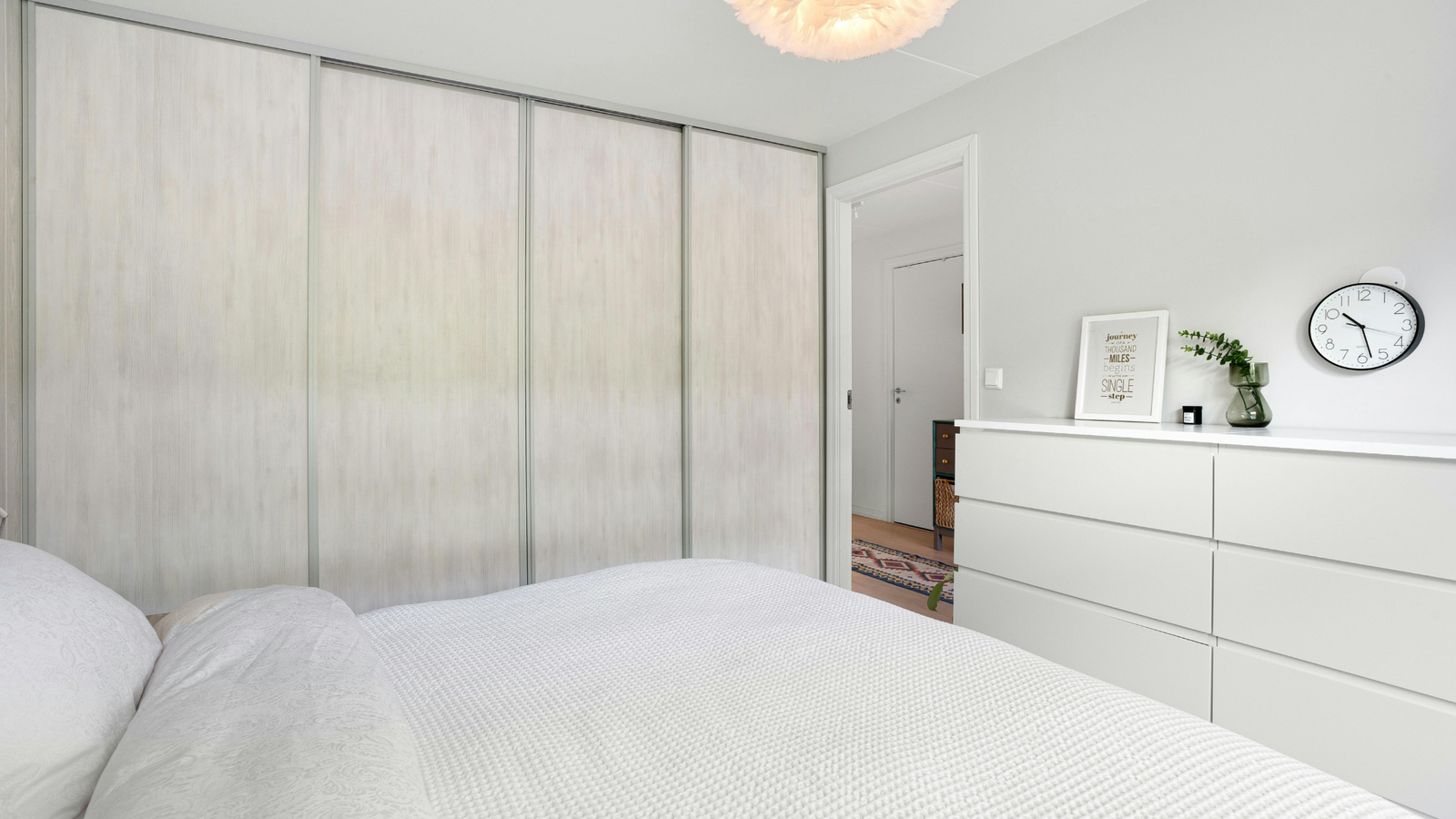
In these scenarios, a high-quality portable wardrobe finished with a high-gloss acrylic or lacquered surface offers a lightweight alternative. While acrylic doesn’t possess the 1:1 reflection ratio of a silvered mirror, a pure white, high-gloss finish will still bounce up to 80% of ambient light back into the room. This provides the dual utility of mobile storage and minor light amplification without the structural permanence of heavy glass.
Execution: The Seamless Aesthetic
A room dominated by an enormous mirror can easily look like a commercial gym if not styled correctly. To maintain residential warmth:
- Frameless or Micro-Bezel: Ditch heavy, ornate wooden borders. Opt for frameless edges or ultra-thin matte black or brushed brass aluminum extrusions.
- Tinted Glass: If your room receives too much direct sunlight and you want to soften the reflection, specify grey or bronze-tinted mirrors. This reduces the lux amplification slightly but adds an incredibly sophisticated, moody architectural element.
- Sectional Breaks: Instead of one monolithic slab of glass, use paneled designs with subtle dividing strips.
Stop settling for dark, uninspiring spaces. By treating your storage solutions as optical tools, you completely redefine the atmospheric boundaries of your bedroom.
Frequently Asked Questions
Can a mirrored wardrobe make a small room look bigger?
Yes. By reflecting the floor plan and bouncing natural light, mirrors create optical continuity. The brain perceives the reflected space as actual square footage, instantly curing visual claustrophobia.
Are sliding mirror doors safe for children’s bedrooms?
Only if specified correctly. They must utilize shatter-resistant, safety-backed glass and feature soft-close mechanisms to prevent trapped fingers and impact shattering.
How do I stop sliding mirror doors from showing streaks?
Avoid harsh chemical cleaners that leave a film. Use a simple 50/50 mixture of distilled water and white vinegar, wiping with a flat-weave microfiber cloth to eliminate lint and streaks completely.