You just signed a new 11-month lease. The apartment layout is perfect, but it entirely lacks built-in closets. You panic-buy a cheap canvas zip-up unit. Six months later, the plastic frame buckles under the sheer weight of your winter coats, leaving your clothes in a pile on the floor.
Moving is a logistical nightmare. Disassembling flimsy particleboard cabinets or wrestling a massive solid wood wardrobe through narrow stairwells only amplifies the chaos. Every time you relocate, cheap storage degrades. Wooden dowels loosen. Backing boards tear. You end up throwing money away on furniture that functions as a disposable commodity rather than a durable asset.
Urban renters need high-performance storage engineered for mobility. You need a portable wardrobe system built with commercial-grade fasteners, or a modular unit that disassembles without structural fatigue. We manufacture these systems at Sri Furniture, and we have the physical stress-test data to prove exactly which storage architectures survive the urban nomad lifestyle.
The 5-Move Portable Wardrobe Stress Test: Analyzing Joint Degradation
To settle the debate between temporary fast-furniture and engineered modular systems, we conducted a real-world stress test. We took three distinct storage types and simulated five complete apartment relocations (assembly, loading, transport vibration, unloading, and reassembly).
The results exposed a massive flaw in standard retail furniture: structural fatigue at the joint level.
- Fabric & Plastic Temporary Units: Catastrophic failure occurred during the reassembly phase of Move 2. The friction-fit plastic corner joints cracked under the torque of re-insertion, rendering the frame unstable.
- Standard MDF Flat-Pack Cabinets: By Move 3, the cam-lock fasteners had chewed through the medium-density fiberboard. The unit lost 40% of its lateral rigidity, resulting in doors that wouldn’t close properly.
- Sri Furniture Modular Systems: Utilizing steel-on-steel threaded inserts and high-density core panels, our modular units maintained 98% structural rigidity after the fifth move. The threads do not strip because they anchor into metal, not wood dust.
Cost-Benefit Analysis: The True Price of Relocation
Evaluating storage requires looking beyond the initial checkout cart. You must factor in the “cost per move” and the lifespan of the unit.
| Storage Category | Initial Cost | Assembly/Disassembly Friction | Lifespan (Urban Renter) | Cost-Benefit Verdict |
|---|---|---|---|---|
| Basic Portable Wardrobe (Canvas/Plastic) | Extremely Low | High (Parts bend/snap easily) | 6 to 12 months | Poor. Acts as a temporary band-aid; high replacement frequency. |
| Solid Wood Wardrobe | Very High | Severe (Often requires professional movers) | 15+ years | Low for renters. Excellent durability, but transport logistics negate the benefits. |
| Modular Sliding Mirror Wardrobe | Medium-High | Low (Engineered for repeated breakdown) | 10+ years | Optimal. Saves floor space; steel hardware survives constant relocation. |
Export to Sheets
A high-quality modular system requires a larger upfront investment than a canvas tent closet, but it completely eliminates the replacement cycle.
Engineering Mobility: Anatomy of a Relocatable Closet
If you want a unit that functions perfectly in your current studio and your future two-bedroom apartment, you must look at the micro-engineering of the hardware.
Tool-Less Locking Mechanisms
Renters despise losing proprietary Allen wrenches. Premium modular storage replaces cheap screws with integrated tension locks. You flip a heavy-duty lever to secure the panels. Disassembly takes minutes, not hours, and there are no small screws to lose in the carpet.
Overcoming Awkward Floor Plans
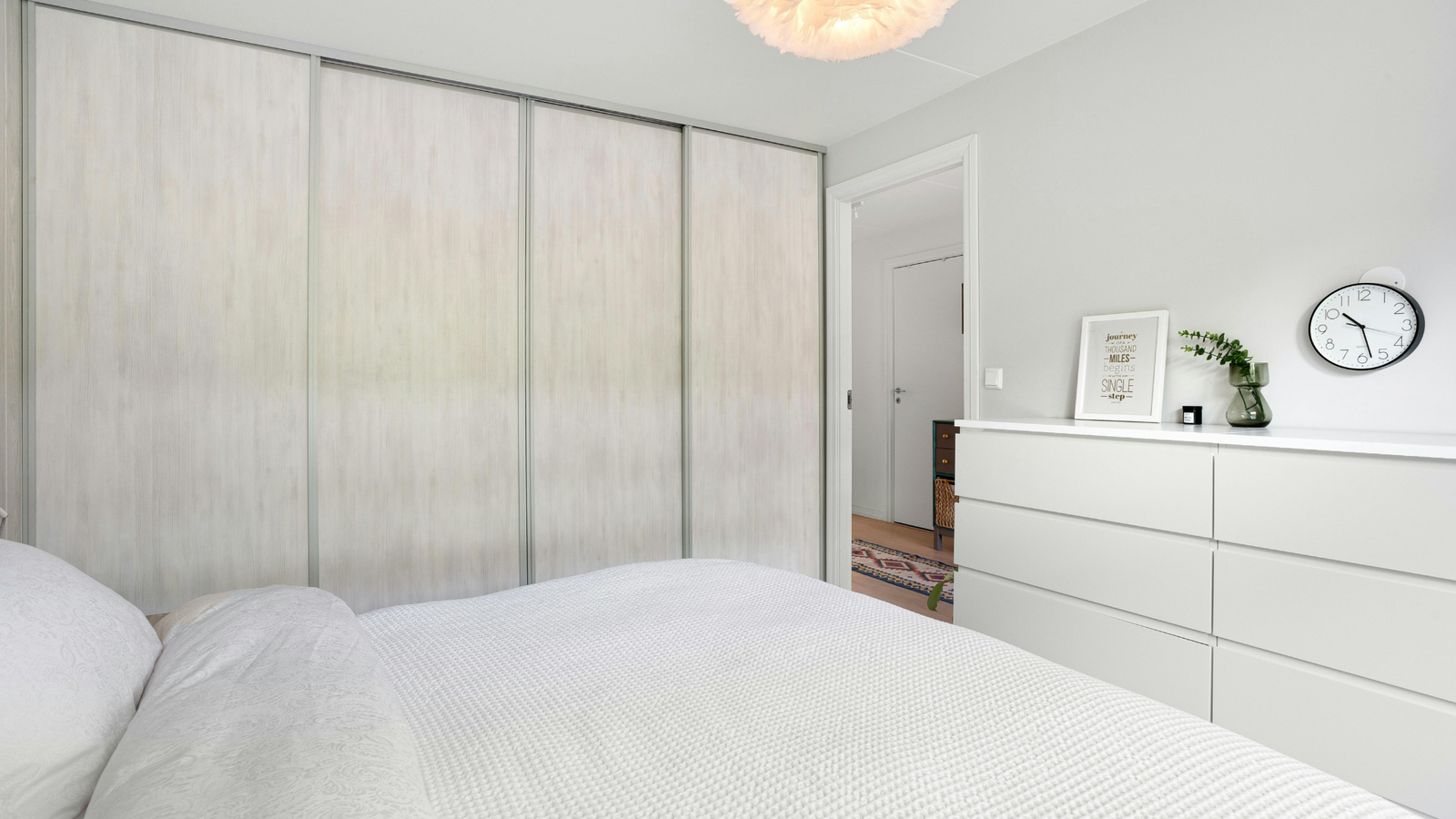
A cramped bedroom cannot accommodate outward-swinging doors. Integrating a sliding mirror wardrobe solves two micro-intents simultaneously: it provides a full-length dressing mirror without requiring wall mounting (which landlords hate), and the track system requires zero clearance to open, preserving your walkway.
Foolproof Assembly Guides
The fastest way to destroy furniture is assembling it incorrectly. We abandoned confusing paper manuals. Our residential units feature QR codes stamped on the concealed edge of the panels, linking directly to step-by-step video schematics tailored to your specific layout.
Commercial Durability for Residential Spaces
At Sri Furniture, our manufacturing pedigree spans complex environments, from modular office configurations to high-traffic educational and institutional furniture. We apply those exact commercial manufacturing tolerances to our residential furniture.
When you buy a wardrobe from us, you aren’t buying a static box. You are investing in an adaptable storage architecture built to withstand the realities of urban leasing. We utilize heavy-duty edge banding, reinforced track wheels, and moisture-resistant cores to ensure your investment looks pristine, whether it’s sitting in a ground-floor flat or a high-rise loft.
Frequently Asked Questions
Is a portable wardrobe actually worth the investment? A high-end, modular portable unit is worth the investment because it scales with you. Cheap canvas models are a waste of capital, but engineered modular wardrobes save you the cost of replacing damaged flat-pack furniture every time you change apartments.
How do you safely transport a sliding mirror wardrobe? You never transport it fully assembled. Premium sliding systems are designed to easily lift the mirrored doors off their tracks. Wrap the mirrors in moving blankets and transport them flat. The main carcass breaks down into flat panels, eliminating the risk of structural twisting during transit.
Are built-in closets better than freestanding units? For homeowners, built-ins maximize exact square footage. For renters, built-ins are an impossibility. Freestanding, modular units offer the aesthetic of a built-in closet with the distinct advantage of taking your investment with you when the lease ends.